



LSU Research Bites: New Imaging Approaches Help Veterinarians Detect Hidden Fractures in Hummingbirds
January 14, 2026
By late February, ruby-throated hummingbirds that have been in Mexico for the winter will be arriving in Louisiana and other Gulf Coast states. As these charismatic birds grace our yards, feasting on feeders and such flowers as bee balm, coral honeysuckle, Turk’s cap, and salvia, they also face risks of injury from manmade structures and our pets.
In Louisiana, injured hummingbirds often find their way to the LSU School of Veterinary Medicine's Wildlife Hospital. The hospital admits more than 2,000 wildlife patients annually, with the aim of treating and releasing them back into the wild.
“Ruby-throated hummingbirds (Archilochus colubris) are among the smallest patients we treat,” said Haerin “Helen” Rhim, who has been conducting research on hummingbirds as a postdoctoral fellow at the LSU School of Veterinary Medicine.
How can veterinarians detect and treat injuries in a bird with a body length of only two inches? Traditional physical examinations that rely on palpation and radiographic equipment designed for larger animals often struggle to detect such tiny fractures.
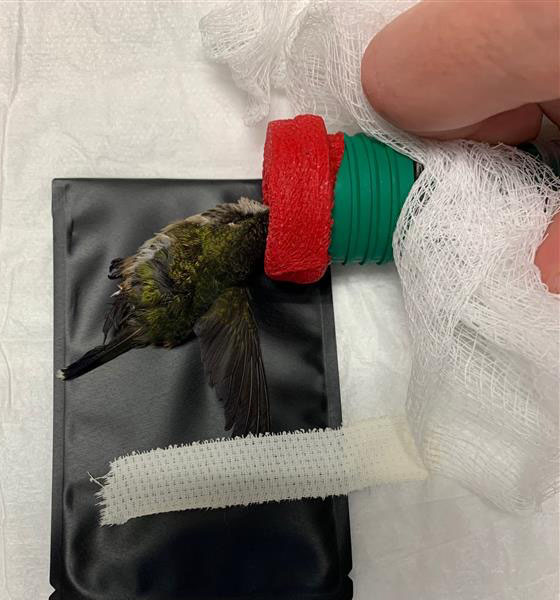
In Louisiana, injured hummingbirds often find their way to the LSU School of Veterinary Medicine's Wildlife Hospital. But how can veterinarians detect and treat injuries in a bird with a body length of only two inches? LSU researchers have an answer.
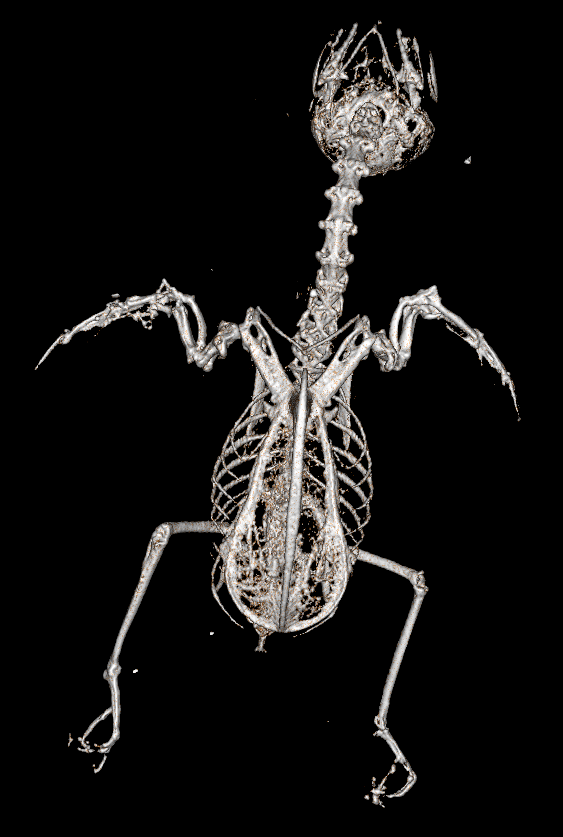
LSU researchers, including Rhim and Mark Mitchell, a professor of zoological medicine, evaluated various imaging tools to determine which best help veterinarians detect small fractures in hummingbirds.
In a study recently published in the MDPI journal Animals, the researchers compared the performance of standard radiographs and micro-CT (Computed Tomography).
They found that 3D-reconstructed micro-CT scans, which combine multiple images acquired via X-rays as a patient is slowly moved through a scanner, provided the highest accuracy and the strongest agreement among veterinarians.
Problem: Finding and treating fractures in tiny hummingbirds is a critical challenge for veterinarians.
Solution: LSU Vet Med researchers tested various methods of detecting fractures in these tiny birds, including radiographs and 3D-reconstructed micro-computed tomography (micro-CT) scans.
Impact: Micro-CT and its 3D-reconstructed skeleton scans outperformed other modalities and improved all diagnostic metrics.
However, even the best-performing 3D scans had a sensitivity of approximately 60% (compared to the 86% sensitivity of standard radiographic imaging for detecting fractures in dogs and cats). This indicates that "no fracture seen" in a hummingbird does not necessarily mean "no fracture present," underscoring the inherent difficulty of imaging such small species.
“This research provides the vital clinical reality and the scientific basis for why we cannot rely on a single radiograph, and why repeated examinations or alternative diagnostic approaches are needed,” Rhim said. "Furthermore, since advanced scans require longer general anesthesia, veterinarians must carefully balance the diagnostic benefits with the clinical risks for each tiny patient."
These findings emphasize the importance of using a combination of physical exams, follow-up imaging, and high-resolution scans to ensure our favorite tiny flyers get the best possible care.
The LSU School of Veterinary Medicine's Wildlife Hospital is a unique hub for wildlife health and student education in Louisiana. The hospital serves as a vital training ground for veterinary students, providing hands-on experience. The facility is entirely donation-funded, and every single patient is brought in by caring citizens who find them in the wild.
Next Step
Discover stories showcasing LSU’s academic excellence, innovation, culture, and impact across Louisiana.