
From Acacia Trees to Date Palms; What We Can Learn from Plants That Thrive Under Stress
February 03, 2026
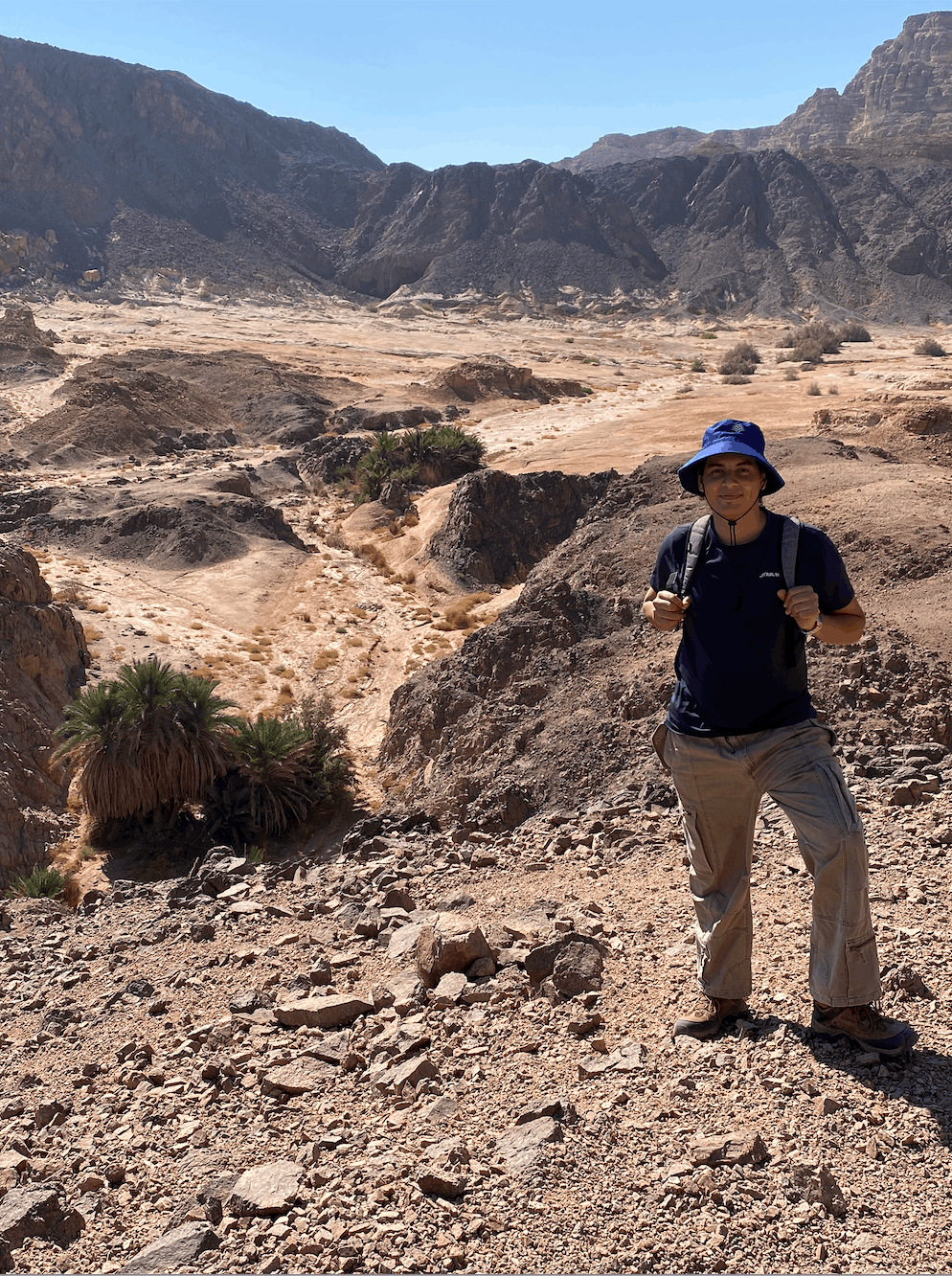
On a 10-day camping trip in the Egyptian Southern Sinai Peninsula.
Although I was born and raised in New York City, where rain and greenery are plentiful, it wasn’t until living in North Africa that I truly understood the saying, “the desert teaches you more about water than the ocean ever could.”
That proverb shaped the researcher I am today and fueled my interest in plant adaptations and stress responses, which I now study in the Dassanayake Lab in the Department of Biological Sciences at Louisiana State University. At its core, the saying reflects a principle that is deeply rooted in biology; systems often reveal their most important functions under stress or limitation.
The idea is echoed in genetics, where researchers study a gene's role not when the gene is active, but when it is “knocked out” or rendered nonfunctional. This allows us to observe the consequences of its inactivation, such as changes in eye color to light grey.
This same principle of understanding function through stress guides my research in the Dassanayake Lab, where we use genomic tools, including DNA and RNA analysis, to study extremophytes, plants that have adapted to survive and even thrive in extreme environments plagued with harsh UV radiation, high salinity levels, drought, extreme temperatures, nutrient deficiencies, heavy metals, and/or flooding.
One of the model organisms we study in the lab is Schrenkiella parvula, an extremophyte native to the saline shores of Lake Tuz in Turkey, where extreme soil salinity and drought are daily challenges. S. parvula is closely related to the widely studied model plant, Arabidopsis thaliana, which allows us to compare both their genetic makeup and identify what enables S. parvula to tolerate such severe stress. Through these studies, we gain insight into how plants respond to environmental stress and evolve adaptive strategies.
When Survival Demands Innovation
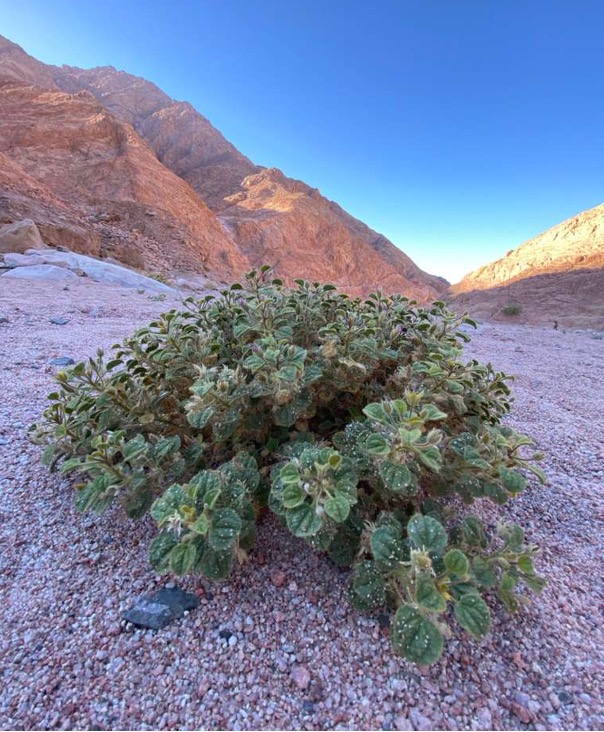
Cleome droserifolia in Sinai, Egypt
My interest in these extremophytic strategies is deeply rooted in lived experiences. Living in Egypt exposed me to arid landscapes and desert ecosystems, where I witnessed harsh environmental conditions firsthand. Through interactions with Bedouin nomads, I developed an appreciation for the resilience required to survive in such environments.
“ While humans can migrate to avoid unfavorable conditions, plants are immobile and must adapt to the local environment, making their survival strategies especially remarkable. ”
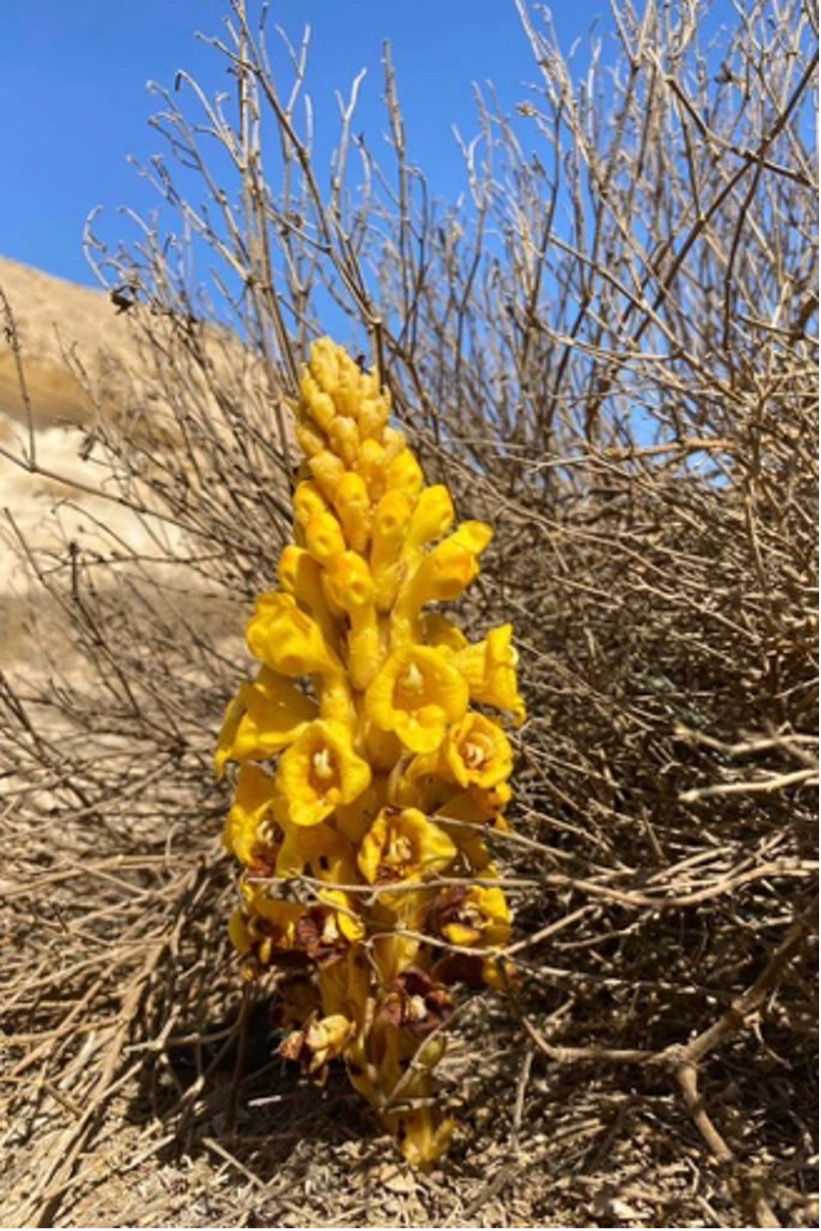
Parasitic Desert Hyacinth [Cistanche tubulosa] in Wadi Degla Protectorate, Egypt
The extraordinary abilities of plants that inhabit harsh environments such as deserts, Arctic regions, and salt lakes can be explained through Darwin’s theory of natural selection, whereby plants are forced to adapt to extreme conditions or risk extinction.
When resources are limited, natural selection favors the emergence of unique and often innovative traits that allow these species to survive and even thrive in otherwise uninhabitable environments. Date palms, for example, require long periods of intense dry heat and very low humidity for their fruit to ripen properly, develop sweetness, and avoid rot. Similarly, S. parvula has been shown to grow faster and perform better under saline soil stress, unlike most plants that typically exhibit reduced growth under such conditions.
Across ecosystems, these adaptations take many forms. From desert plants that have evolved to remain dormant for decades and emerge only when conditions are favorable, to parasitic desert plants that have evolved to parasitize host plants capable of producing their own food and obtaining their own water. Succulents minimize water loss by evolving thickened leaves and resurrection ferns in Louisiana grow epiphytically on oak branches, shriveling and browning during dry and cold periods before rehydrating and turning back green when moisture and temperature conditions improve.
There are thousands more examples of plant brilliance, known and unknown, that can inspire us to strengthen the resilience of our crops.
Extremophytes and the Future of Food
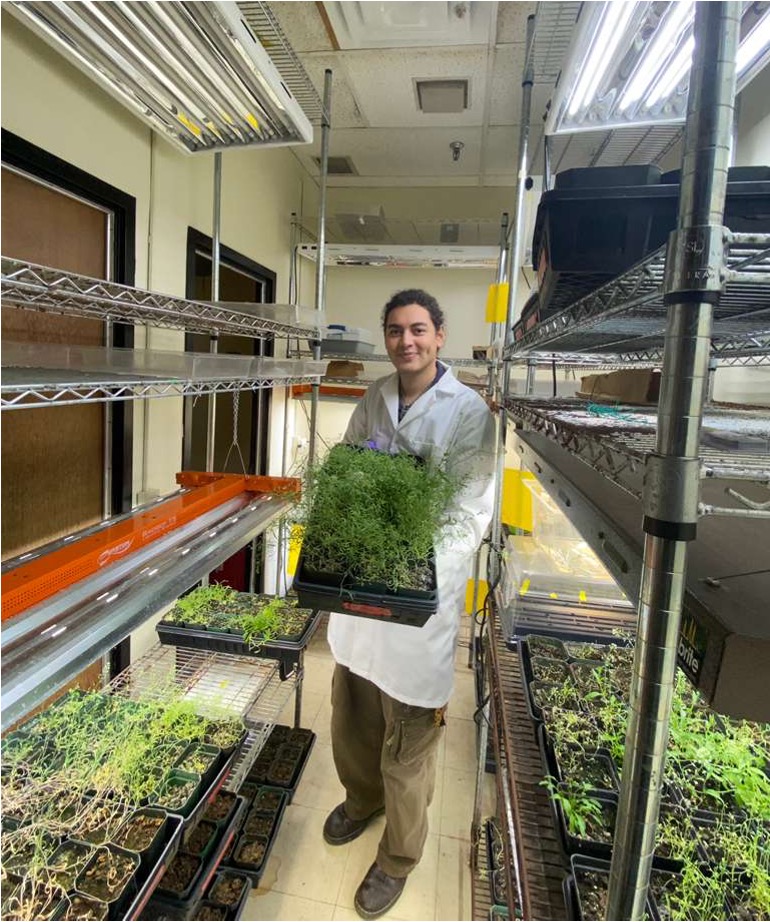
In the Dassanayake Lab's growth chamber, holding a tray of lab-grown Eutrema salsugineum and Schrenkiella parvula.
While these adaptations are fascinating from an evolutionary perspective, they are increasingly urgent from an agricultural one. As the global population continues to grow, the demand for food and energy increases alongside it. At the same time, agricultural malpractices such as fertilizer runoff, monocultures, nutrient depletion, and topsoil loss are rendering arable land increasingly unsuitable for farming.
Combined with the pressures of climate change, these challenges highlight the urgent need to develop crops that are more resilient and capable of growing in stressful environments. By studying extremophytes, we aim to uncover genetic strategies that could help make currently unviable land productive again and contribute to a more sustainable agricultural future.