
Core Computational Science
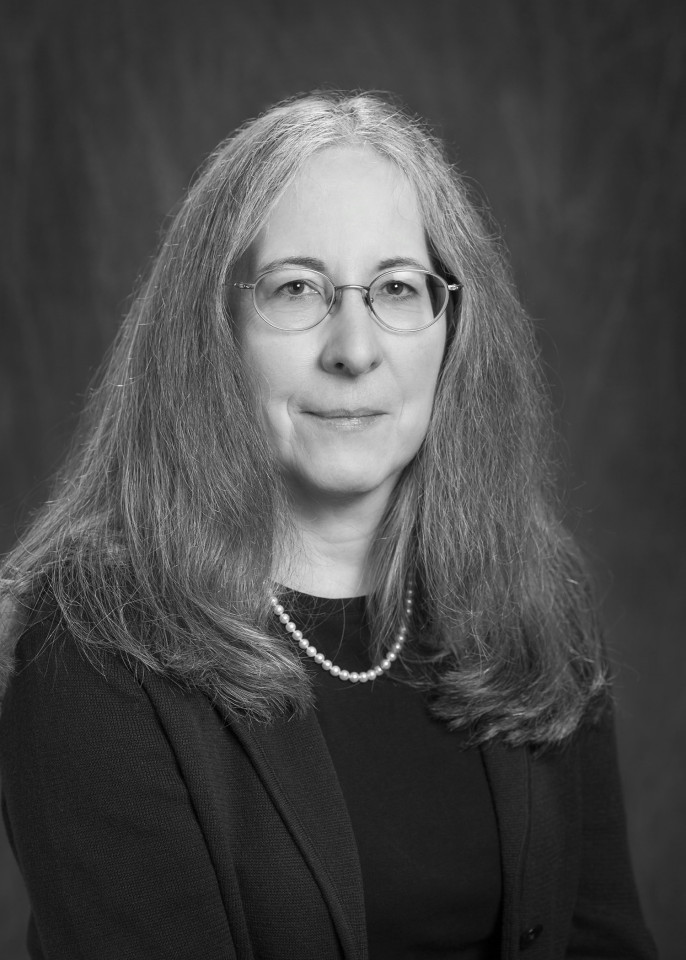
Susanne Brenner
Susanne C. Brenner is a Boyd Professor at Louisiana State University with a joint appointment in the Department of Mathematics and the Center for Computation & Technology, where she also serves as Associate Director for Academic Affairs at CCT.
She earned a B.S.Ed. in Mathematics and German from West Chester State College in 1980, studied Mathematics and German at the University of Tübingen, and received an M.A. in Mathematics from the State University of New York at Stony Brook in 1982. She went on to obtain an M.S. (1985) and Ph.D. (1988) in Mathematics from the University of Michigan. Before joining LSU in 2006, she held faculty positions at Clarkson University and the University of South Carolina, where she was Professor and Associate Chair.
Her research centers on numerical analysis and scientific computing, with a particular emphasis on finite element methods for the numerical solution of partial differential equations. She has made influential contributions to nonconforming finite element methods, interior penalty methods, multigrid and domain decomposition methods, and the development and analysis of robust and efficient algorithms for problems in solid and fluid mechanics and optimal control.
Brenner is a Member of the European Academy of Sciences, a Fellow of the Society for Industrial and Applied Mathematics, the American Mathematical Society, the American Association for the Advancement of Science, and the Association for Women in Mathematics. She served as President of SIAM for the 2021–2022 term. She received the 2025 Blaise Pascal Medal in Computational and Information Sciences and was selected as an Invited Speaker for the 2026 International Congress of Mathematicians.
Hartmut Kaiser is a Professor in the Division of Computer Science & Engineering at Louisiana State University and holds a joint appointment at the Center for Computation & Technology.
He earned his M.Sc. in Informatics, Cybernetics and Databases from Leningrad Electrotechnical University in 1985, and completed both his Ph.D. (Dr-Ing) and Habilitation (Dr.sc.techn.) in Computer Science at the Technical University of Chemnitz in Germany.
His research focuses on high-performance computing, parallel programming models and asynchronous many-task (AMT) runtime systems. He is the founding architect of the HPX C++ runtime system and the ParalleX execution model, which aim to provide a modern, scalable and standards-conformant approach for exploiting fine-grained parallelism on emerging exascale architectures. His work also includes performance-portable software frameworks, runtime-level support for heterogeneous systems and large-scale open-source software for scientific computing.
Kaiser is an active member of the ISO C++ Standards Committee (WG21), contributing to the Concurrency and Parallelism subgroup (SG1) and authoring proposals that influence the future of parallel and asynchronous programming in C++. His work has been supported by the National Science Foundation, the Department of Energy and other federal agencies, and he leads the STE||AR Group at CCT, a leading research team in parallel and distributed computing.
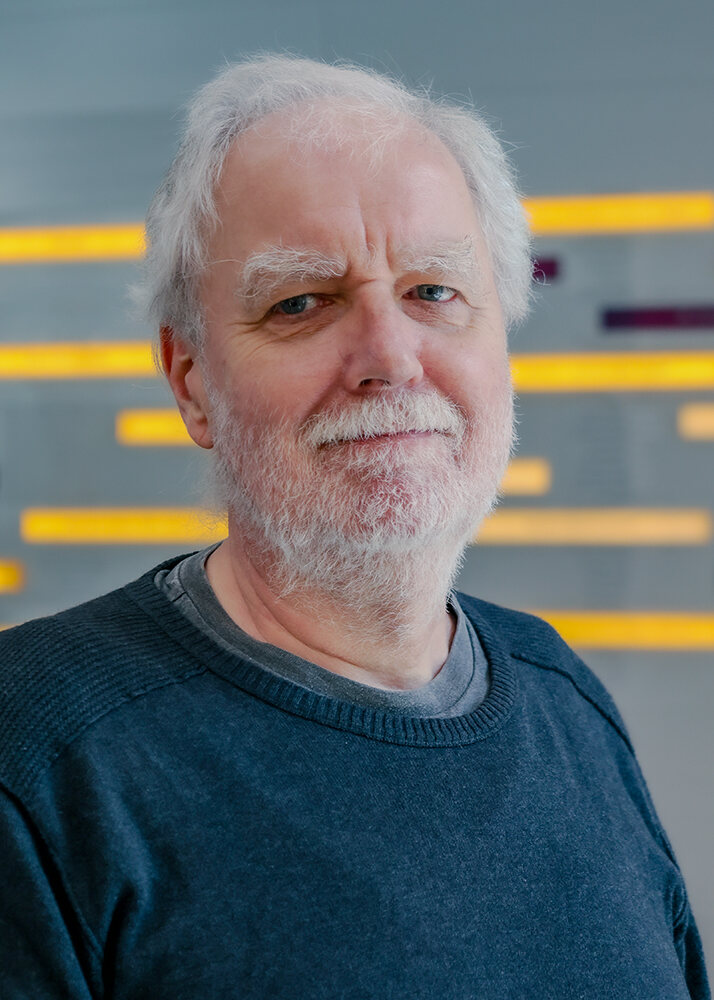
Hartmut Kaiser
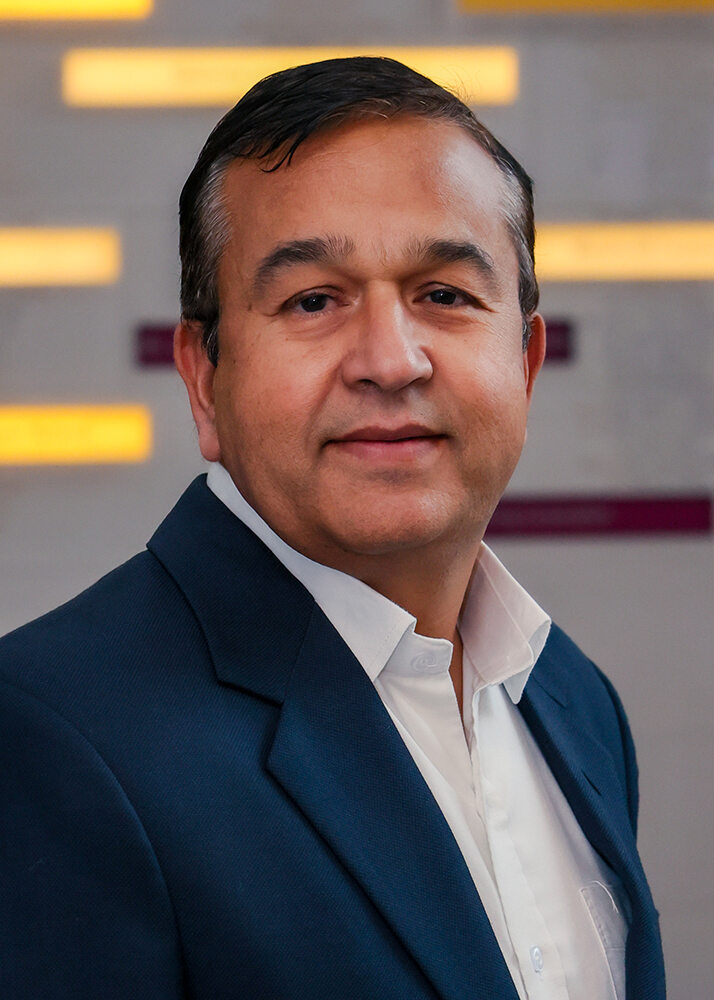
Bijaya B. Karki
Bijaya B. Karki is the McDermott Inc. Endowed Professor in the Division of Computer Science and Engineering at Louisiana State University and holds a joint appointment at the Center for Computation & Technology. He served as chair of the Division of Computer Science and Engineering in the College of Engineering from 2011 to 2024.
He earned an M.Sc. from Tribhuvan University in Kathmandu, Nepal, in 1992, a diploma from the International Centre for Theoretical Physics (ICTP) in Trieste, Italy, in 1994, and a Ph.D. in computational physics from the University of Edinburgh in 1997. He joined the LSU faculty in 2003.
His research focuses on large scale simulations and computational materials science, including first principles molecular dynamics of melts, atomic scale modeling of Earth materials under extreme conditions, and scientific visualization of time dependent high dimensional data. He develops high performance computing workflows that couple simulation, visualization, and data analysis for problems in geophysics, planetary science, and materials research.
Karki’s work has been supported by the National Science Foundation, NASA, and other federal agencies. He received an NSF CAREER Award in 2004 and has been recognized with the LSU Rainmaker Award.
J. (Ram) Ramanujam is the John E. & Beatrice L. Ritter Distinguished Professor of Electrical and Computer Engineering at Louisiana State University and held the position of Director of the Center for Computation & Technology at LSU from 2014 until June 2025, at which time he became Special Advisor on AI, Data & Quantum Science to the Vice-President of Research.
He earned a bachelor’s degree in Electrical Engineering from Indian Institute of Technology Madras, and received his M.S. and Ph.D. in Computer Science from The Ohio State University. He joined LSU as a faculty member in 1990 and has held a joint appointment at CCT since 2005.
His research focuses on compilers, runtime systems and hardware/software co-design for high-performance computing, embedded and low-power systems, and software tools for multicore and heterogeneous architectures.
Ramanujam was awarded the NSF Young Investigator Award in 1994, was named LSU Distinguished Research Master in 2016, and has received multiple best-paper awards in parallel and distributed systems conferences.
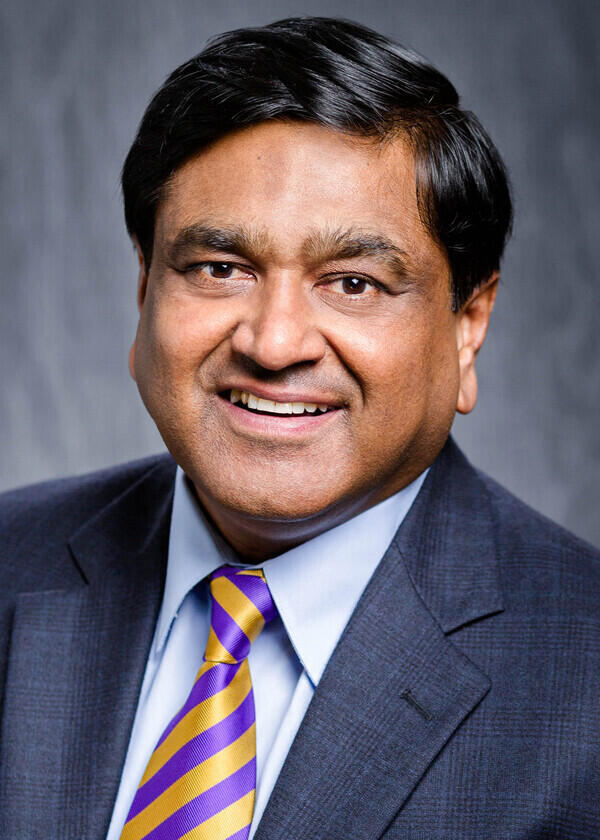
J. (Ram) Ramanujam
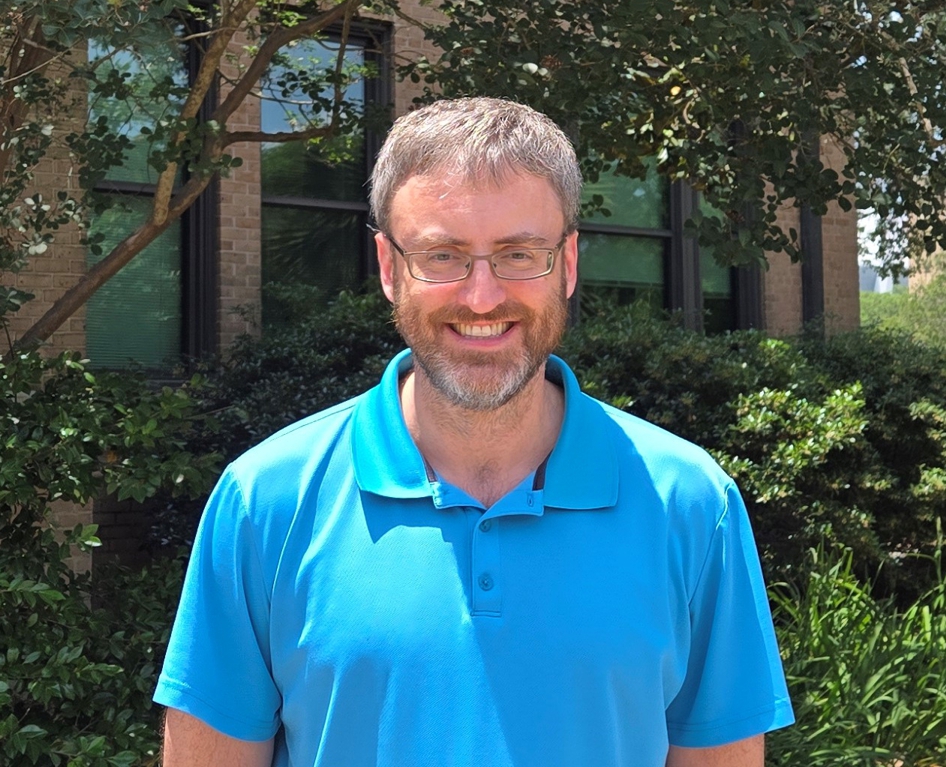
Shawn Walker
Shawn W. Walker is a Professor in the Department of Mathematics at Louisiana State University and holds a joint appointment with the Center for Computation & Technology.
He earned a B.S. in Electrical Engineering from Virginia Tech in 1998, an M.S. in Engineering and Applied Science from Yale University in 2002, and both an M.S. in Applied Mathematics and Scientific Computing and a Ph.D. in Aerospace Engineering from the University of Maryland in 2007. He completed postdoctoral research at the Courant Institute of Mathematical Sciences at New York University from 2007 to 2010. Walker joined LSU.
His research focuses on geometric partial differential equations and finite element methods, with applications to liquid crystals, geometric evolution problems, free-boundary problems, optimal control of PDEs, and PDEs on manifolds. He works on the analysis and development of numerical methods for complex physical and geometric systems.
Walker is the author of The Shape of Things: A Practical Guide to Differential Geometry and the Shape Derivative (SIAM, 2015), a widely used reference in computational geometry and shape optimization. His research has been supported by the National Science Foundation, including an NSF CAREER award.
Xiaoliang Wan is a Professor in the Department of Mathematics at Louisiana State University with a joint appointment at the Center for Computation &Technology.
He earned his B.S. and M.S. in Mathematics from Peking University and completed his Ph.D. in Applied Mathematics at Brown University in 2007. He then held postdoctoral positions at Brown University, MIT and Princeton University before joining LSU in 2009.
His research focuses on stochastic modeling and scientific computing, especially numerical methods for stochastic partial differential equations, polynomial chaos expansions, rare-event and minimum-action methods and adaptive algorithms for uncertainty quantification. More recent work includes deep-learning-based approaches for high-dimensional density estimation and PDEs.
Wan’s research has been supported by the National Science Foundation, the Air Force Office of Scientific Research and the Department of Energy. He is currently part of an Office of Naval Research project with Integer Technologies focused on intelligent data management for distributed naval platforms.
Xiaoliang Wan
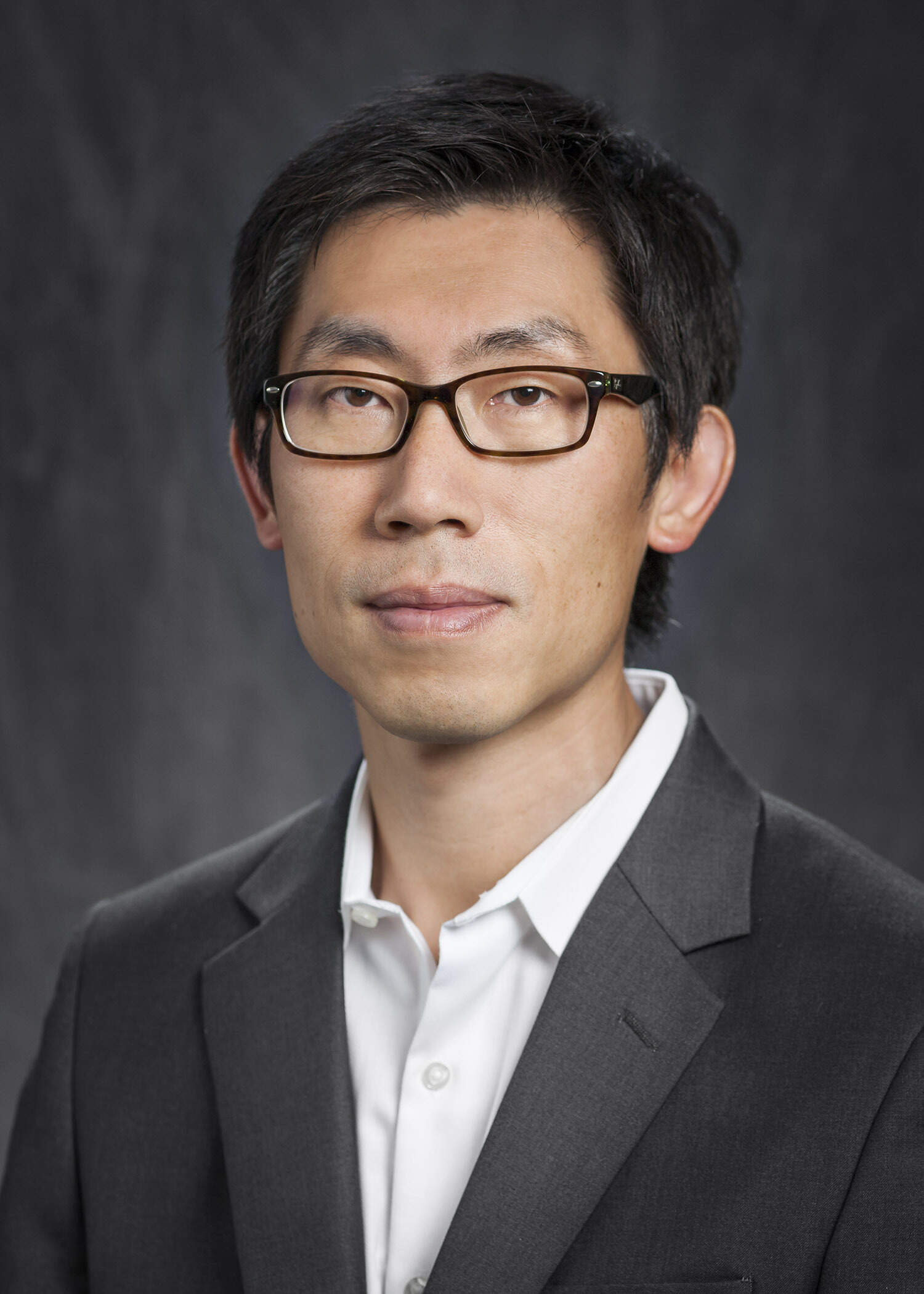
Seungwon Yang
Seungwon Yang is an Associate Professor in the School of Information Studies at Louisiana State University and holds a joint appointment with the Center for Computation & Technology.
He earned his B.S., M.S., and Ph.D. in Computer Science from Virginia Tech (B.S. 2004; M.S. 2007; Ph.D. 2013). Before joining LSU, he was a Postdoctoral Research Fellow at George Mason University.
His research focuses on crisis informatics, social media analytics, information retrieval and visualization, and machine and deep learning applied to large-scale social and information systems. He studies how data from social media, digital libraries, and online platforms can be leveraged for disaster response, information access, and improved decision-making.
Hongchao Zhang is the A. K. and Shirley Barton Professor in the Department of Mathematics at Louisiana State University and holds a joint appointment at the Center for Computation & Technology.
He earned a B.S. in Computational Mathematics from Shandong University in 1998 and an M.Sc. from the Computing Center of the Chinese Academy of Sciences in 2001. He completed his Ph.D. in Mathematics at the University of Florida in 2006, then held postdoctoral research appointments at the IBM Thomas J. Watson Research Center and at the Institute for Mathematics and its Applications at the University of Minnesota. He joined Louisiana State University in 2008.
His research focuses on nonlinear optimization and its applications, stochastic optimization
algorithms, sparse matrix computations and graph partitioning, numerical linear algebra,
and large scale methods for challenging nonconvex problems in applied mathematics,
engineering and data science.
Zhang's research has been supported by the National Science Foundation, and the Office
of Naval Research. He is also one of the recipients the 2022 INFORMS Computing Society
Prize, for pioneering contributions to nonconvex stochastic optimization.
Hongchao Zhang